





























No products in the cart.




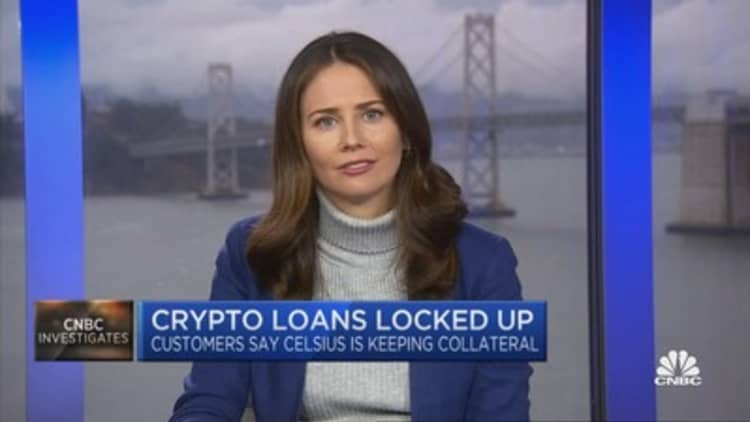
Alan Nitowski He has an MBA, has worked in technology and finance for over 25 years, and is the CEO of a Nasdaq-traded mobile software company. That didn’t stop him from being duped by the cryptocurrency company.
Knitowski borrowed $375,000 over several years from crypto lender Celsius and put $1.5 million into it. Bitcoin as collateral. He didn’t want to sell Bitcoin because he liked it as an investment and he believed the price would go up.
That was the Celsius model. Cryptocurrency investors can essentially store their holdings in a company in exchange for a loan in dollars they can spend. Nitowski got his bitcoin back when he paid off his loan.
But that didn’t happen because Celsius, which earlier this year managed $12 billion in assets, forced into bankruptcy July after the crypto price plunge sparked an industry-wide liquidity crisis. Knitowski and thousands of other loan holders have more than $812 million of his collateral locked up on the platform, and according to bankruptcy records, Celsius will keep the collateral even after the borrower has paid off the loan. It is shown that it was not returned to the borrower.
“Every aspect of what they did was wrong,” says the Austin, Texas-based company who runs the company. fan wearsays in an interview. “If my CFO or I actually did something like this, we’d be charged immediately.”
The creditors are currently in bankruptcy proceedings to recover at least some of the funds. On Friday, they showed some optimism after Celsius announced the sale of its wealth custody platform called GK8 to his Galaxy Digital.
McCarter & English bankruptcy attorney David Adler, who represents Celsius’ creditors, said money from the deal must be used to pay attorneys’ fees. Beyond that, there may be funds left over for previous customers.
“The big question is who is entitled to the money they make from GK8,” Adler told CNBC. Adler said he represents a group of his 75 borrowers who hold about $100 million in digital assets on the Celsius platform.
Further relief is likely later this month as the auction for Celsius’ lending portfolio begins. If another company purchases the loan, the customer may have the opportunity to repay the loan and release the collateral.
Knitowski told CNBC that he chose to take out the loan at a 25% loan-to-value ratio. So if he took out his $25,000 loan, he would be pledged four times that amount, or $100,000.
The more collateral the borrower wants to post, the lower the interest rate on the loan. If the borrower fails to repay the loan, the lender can seize and sell the collateral to recover the costs. Like a mortgage, the borrower uses the house as collateral. In the crypto world, borrowers can request loans and post bitcoin as collateral.
Earlier this year, the price of Bitcoin dropped, forcing Nittowski to pay off one of his Celsius loans, avoid a margin call, and take up more collateral. However, after doing so, the company did not return the bitcoin that served as collateral for that loan. According to the company’s terms of service, the assets in these accounts are the property of Celsius and not the customer.
“Imagine you paid off your car, but someone is keeping it,” Knitowski said. “You pay off the house, but someone else keeps it. In this case, it’s like paying off a loan. Instead, you pay it off and they don’t give you back the collateral.”
The problem didn’t stop there. The cryptocurrency platform also failed to provide full Federal Lending Act (TILA) disclosures to borrowers, according to former employees and an email sent to customers on July 4. This act is a consumer protection measure that requires lenders to provide material information to borrowers. , annual rate (APR), term of the loan, total cost of the borrower, etc.
An email to the borrower stated that “disclosures required to be provided under the Federal Lending Act did not include one or more of the following,” and subsequently stated that the missing More than 10 possible disclosures were listed.
A former Celsius employee who requested anonymity told CNBC the company is retroactively seeking to comply with TILA.
“You don’t have to say, ‘Oops, we forgot the 25 items of the True Lending Act and we’re going to go over them and pray,'” Knitowski said.
Jefferson NunnEditor and contributor to Crypto.news.
Nunn, who lives in Dallas, said he got a loan to invest in more bitcoin after seeing the platform’s promotion. He said he heard about Celsius after doing a podcast with his co-founder, Nuke Goldstein. On the show, Goldstein said, “Your funds are safe,” Nunn said, while former Celsius CEO Alex Mashinski made a similar comment shortly before halting his withdrawal.
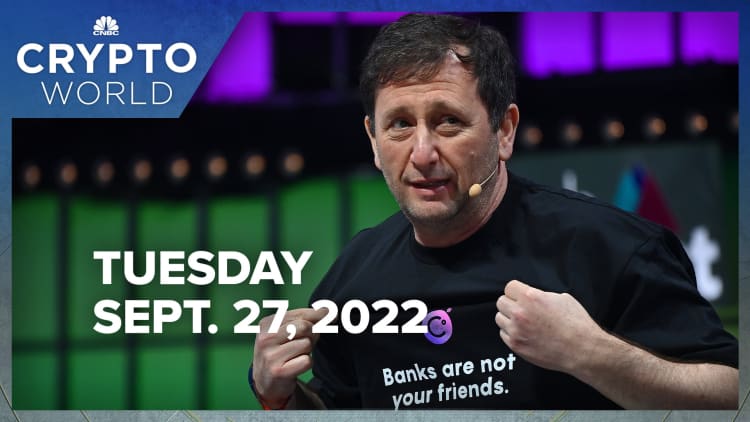
Celsius CEO Alex Mashinski on stage in Lisbon at Web Summit 2021
Piaras Mdheach | Sportsfile | Getty Images
“It’s basically a mess and my funds are still trapped there,” Nan said.
That theme has come up repeatedly in cryptocurrencies, but more recently FTX last month’s failureThe exchange’s founder and CEO, Sam Bankman-Fried, took to Twitter to tell his followers that the company’s assets were fine. The next day he was looking for a relief package amidst a liquidity crisis.
Celsius’ implosion isn’t as big as FTX, which recently hit a $32 billion valuation, but the company’s management faces criticism. According to court filings in October, the chief executive said: robbed of millions of dollars before the company stops withdrawing the client’s funds.
A former employee, who spoke on condition of anonymity, said there was a lack of financial oversight that caused a significant hole in the company’s balance sheet. One of his biggest problems was that he had a synthetic short to Celsius, which happens when the company’s assets and liabilities don’t match.
A former employee told CNBC that if customers deposited crypto assets into Celsius, those funds were supposed to be available whenever customers wanted to withdraw. However, Celsius was taking customer deposits and lending them to riskier platforms, so it didn’t have the liquidity to return the funds if needed.
As a result, when clients wanted to withdraw their funds, Celsius rushed to buy assets on the open market, often at a premium, the people said.
“It was a colossal error in judgment and business management that took a serious toll on the organization’s balance sheet,” said the former employee.
He also said that Celsius is accumulating worthless cryptocurrency tokens as collateral. On its platform, Celsius said that customers could compound cryptocurrencies with BTC, ETH, and more than 40 other cryptocurrencies. You can earn rewards.” But the team responsible for deploying these coins had nowhere to deal with many of the more obscure tokens, according to former employees.
A former employee said he left Celsius after discovering that the company was not careful with its customers’ funds and was making risky bets to continue the high returns promised to depositors.
“Many individuals withdrew all their money from the traditional banking system and put their full trust in Alex Mashinski,” the person said. “And now these individuals are unable to pay medical bills, weddings, mortgages and retirement benefits, weighing heavily on me and my colleagues who left the organization.”
Celsius did not respond to multiple requests for comment.machine ski resigned September Celsius declined to comment.